Monstera Deliciosa Care: Light, Watering, Soil & Moss Poles
Learn Monstera deliciosa care indoors, including bright indirect light, watering, chunky soil, moss poles, pruning, propagation, yellow leaves, brown edges, and root stress.
Quick Answer
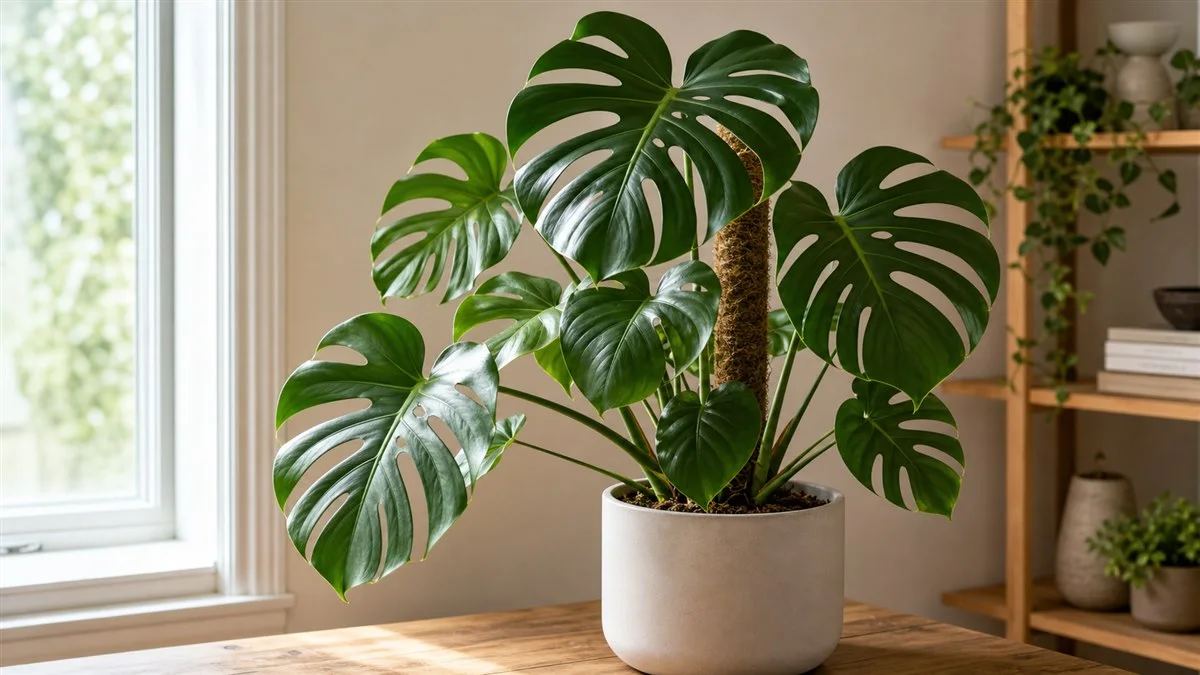
The Monstera deliciosa thrives in bright, indirect light, requires watering when the top inch of soil feels dry, and benefits from a chunky soil mix with good drainage. Support its growth with a moss pole and avoid overwatering to prevent root stress. Prune to encourage growth, propagate through node cuttings, and watch for signs of yellow leaves or brown edges.
Understanding Light Needs
Monstera deliciosa prefers bright, indirect light. This mimics its natural habitat under the canopy of tropical forests. Direct sunlight can scorch its leaves, while too little light slows growth.
Diagnosing Light Conditions
- Bright Indirect Light: Place near an east or north-facing window. Use sheer curtains if needed.
- Signs of Too Much Light: Yellowing leaves or scorched edges.
- Signs of Insufficient Light: Leggy growth and smaller leaves.
For more, explore our Plant Care Light Guide.
Watering Routine
Watering needs vary with the season and environment. Typically, water when the top inch of soil is dry. Overwatering can lead to root rot.
Watering Diagnosis Checklist
- Overwatered Signs: Wilting, yellow leaves, and soggy soil.
- Underwatered Signs: Dry, brown leaf tips and slow growth.
Use a moisture meter or finger test to check soil moisture. Refer to our Watering Guide for more details.
Soil and Potting
A chunky, well-draining soil mix is essential. Consider a mix of potting soil, perlite, and orchid bark to mimic natural conditions.
Pot and Drainage
- Ensure pots have drainage holes to prevent waterlogging.
- Repot every 1-2 years or if roots grow out of the pot.
Check out our Soil and Potting Guidance for more tips.
Moss Poles and Support
Monstera deliciosa naturally climbs. A moss pole supports vertical growth and helps aerial roots anchor.
Using Moss Poles
- Secure the pole in the pot, close to the plant's main stem.
- Gently tie stems to the pole with plant ties.
Moss poles also help maintain humidity around the plant.
Pruning and Propagation
Prune to control size and encourage bushier growth. Use clean, sharp scissors to cut just above a node.
Propagation by Node Cuttings
- Cut a stem with at least one node and aerial root.
- Place in water or soil to root.
For more, see our Plant Propagation Guide.
Fenestration and Growth Patterns
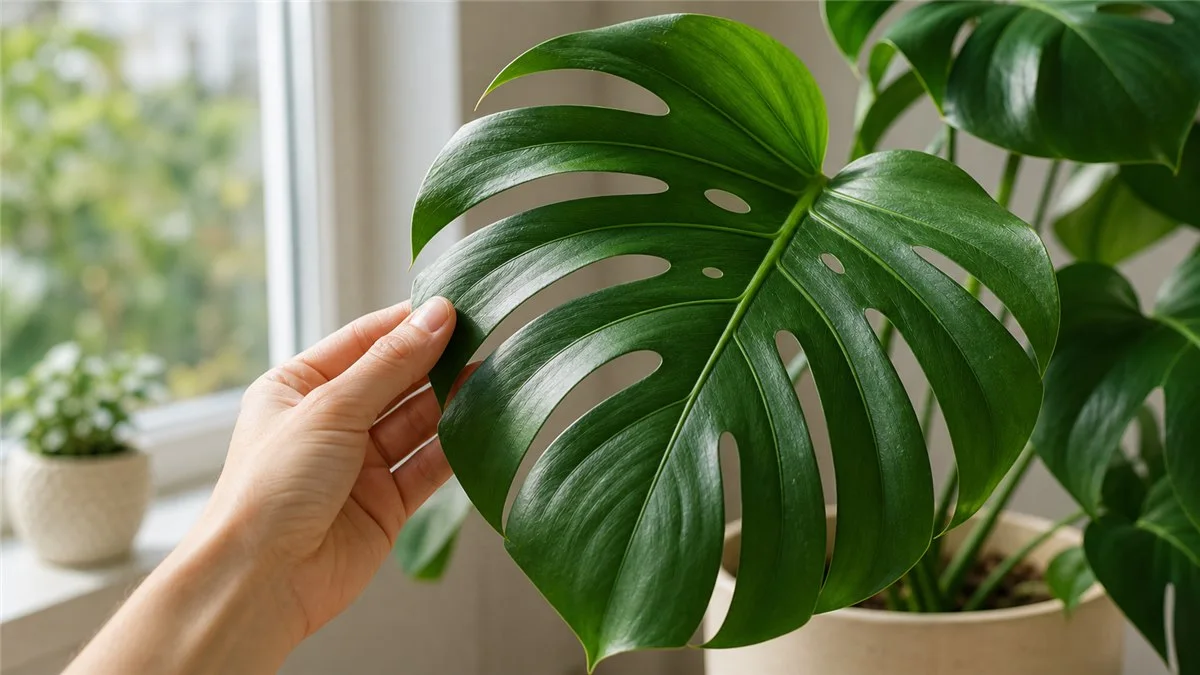
Fenestration, or leaf splitting, occurs naturally as the plant matures. Adequate light and care promote this feature.
Encouraging Fenestration
- Provide consistent light and humidity.
- Ensure proper nutrition and care.
Troubleshooting Common Issues
Yellow Leaves
Caused by overwatering or nutrient deficiencies. Adjust watering and check soil health.
Brown Edges
Usually due to underwatering or low humidity. Increase humidity and check watering schedule.
Root Stress and Repotting
Signs of root stress include slow growth and wilting. Repotting helps if the plant is root-bound.
Repotting Steps
- Choose a pot 2 inches larger in diameter.
- Use fresh, appropriate soil mix.
Pet Safety Notes
Monstera deliciosa is toxic to pets if ingested. Keep out of reach from cats and dogs.
For more, see our Pet Safety Guide.
Conclusion
Caring for Monstera deliciosa involves understanding its light and water needs, using the right soil, and providing support with a moss pole. Watch for common issues and adjust care as needed to enjoy a lush, thriving plant.
Quick diagnosis before you change care
Plant-specific care starts with the species, but it still has to be adjusted for your home, your potting mix, your light, and the way the plant is responding.
- Check soil moisture below the dry-looking surface before watering or withholding water.
- Look at the newest growth separately from older damaged leaves, because old damage rarely repairs itself.
- Inspect leaf undersides, stems, soil surface, and drainage holes for pests, root stress, or sour-smelling soil.
- Ask what changed recently: a move, repotting, fertilizer, heat, drafts, brighter sun, lower winter light, or a new watering habit.
A simple care routine to try next
Choose the most likely issue and change only that variable first. If the soil is staying wet, improve drying time before adding fertilizer. If the plant is stretching, improve light before pruning heavily. If pests are visible, isolate the plant before treating the whole collection.
After a change, give the plant time to respond. For many houseplants, the clearest signal is not whether an old leaf improves, but whether new growth appears stronger, roots look healthier, and the plant stops declining.
Common mistakes to avoid
- Repotting, fertilizing, moving, pruning, and treating pests all in the same week.
- Watering because a reminder fired instead of because the soil and plant indicate it is time.
- Assuming every yellow leaf means the same thing across different species and seasons.
- Using pest or fertilizer products without reading the label, testing first, or considering pets and children.
Safety and household notes
Verify plant identity before relying on toxicity guidance. Many common houseplants can irritate pets or children if chewed, and some pest treatments or soil amendments need ventilation, gloves, or careful storage. If exposure is urgent, contact a veterinarian, poison control service, or local professional rather than waiting on a plant-care article.
Monstera light requirements indoors
Monstera deliciosa grows best in bright indirect light. Indoors, that usually means close to a bright window where the plant receives strong daylight without harsh afternoon sun baking the leaves. An east window, a filtered south or west window, or a position beside a bright window often works better than a dim corner across the room.
Low light is one of the quiet reasons Monsteras stall. The plant may stay alive, but new leaves can become smaller, stems can stretch, and fenestrations may slow down. If the soil stays wet for a long time after watering, that can also be a light problem because the plant is not using water quickly.
How often to water Monstera deliciosa
Water when the upper portion of the potting mix has dried, then water thoroughly until excess drains away. For a small plant, that may mean checking the top inch or two. For a large plant in a deep pot, check several inches down because the surface can dry while the lower root zone is still wet.
A fixed weekly schedule is less reliable than pot weight, soil texture, and root-zone moisture. Monsteras in bright light, chunky soil, terracotta, warm rooms, or active growth usually dry faster. Plants in dense soil, plastic pots, dim rooms, winter light, or oversized containers dry more slowly.
Chunky soil and pot drainage
Monstera is an aroid, so roots benefit from both moisture and air. A chunky indoor mix with ingredients such as bark, perlite, pumice, coco chips, or coarse amendments usually performs better than a dense mix that stays wet and airless. The pot should have drainage holes, and standing water should be emptied from saucers or cover pots.
If leaves yellow while the pot stays heavy, inspect the mix and drainage before adding more water or fertilizer. A healthy Monstera should use water at a predictable pace in good light. A pot that remains wet for many days may need better light, a better-aerated mix, or a container that matches the actual root ball.
Moss poles, pruning, and fenestration
Monstera deliciosa is a climbing plant. A moss pole, plank, trellis, or sturdy stake can help organize the stems and encourage more upright growth, but support does not replace light. The plant still needs enough energy and healthy roots to produce large split leaves.
Fenestrations are influenced by age, genetics, light, and overall vigor. Young plants often make solid leaves first. If an older Monstera stops producing split leaves, check light placement, root health, and watering consistency before trying to force growth with fertilizer.
Yellow leaves, brown edges, and root stress
A single old lower yellow leaf can be normal. Several yellow leaves, especially while the pot is heavy, point more strongly toward wet roots, low light, dense soil, or drainage trouble. Brown edges can come from underwatering cycles, dry air, mineral buildup, direct sun, or damaged roots, so the location and timing of the damage matter.
Read the newest growth first. Strong new leaves mean the plant may simply be carrying old damage. Smaller new leaves, weak stems, yellowing that continues upward, or a sour-smelling pot are stronger reasons to inspect roots and care conditions.
Propagation and repotting
Monstera cuttings need a node. A leaf and petiole without a node may stay green for a while but will not grow into a new plant. Cut with clean tools, root the cutting in water or a light medium, and pot it once roots are established enough to support steady moisture use.
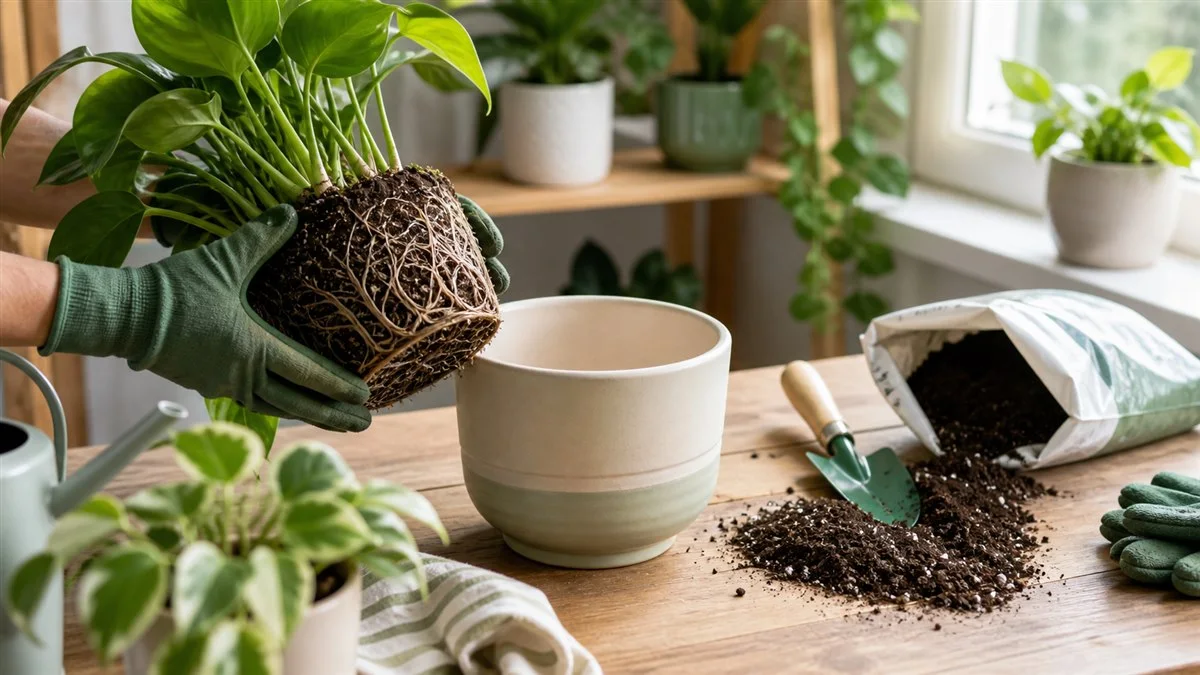
Repot when roots are crowded, the mix has broken down, or watering becomes difficult to manage. Move up only one pot size in most cases. A very large pot around a modest root system can stay wet too long and create the exact root stress people are trying to fix.
When to wait before changing care again
Many houseplants respond slowly. After you move a plant, repot, correct watering, prune, or treat pests, give it enough time to show new evidence. Old leaves may remain scarred, yellow, or torn. Look for new growth, stable stems, healthier roots, and a more predictable drying rhythm. If the plant keeps declining after a reasonable adjustment period, inspect again rather than stacking more changes on top of the first one.
Plant care works best when you change one variable at a time. Check soil moisture, light, roots, pests, and recent care changes before buying products or repotting in a hurry.