
Houseplant troubleshooting
Yellow leaves diagnostic: read the pattern before changing care
Use this quick diagnostic checklist to compare leaf position, soil moisture, drainage, light, and recent changes before watering, fertilizing, treating, or repotting.
This page is the quick symptom checklist. The complete guide explains every major cause, how to compare overwatering with underwatering, and what recovery looks like. Read the complete yellow leaves causes and fixes guide.
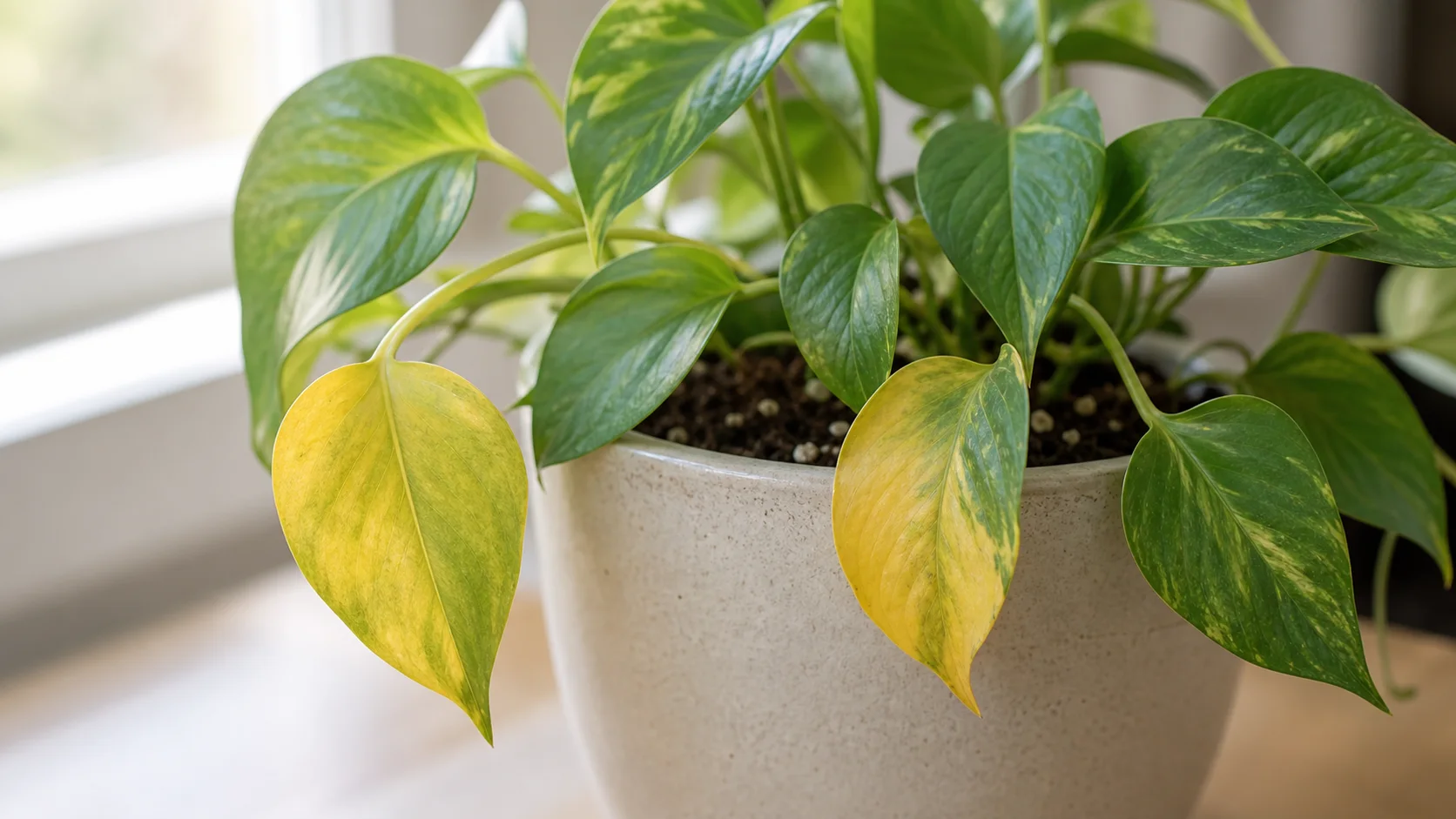
What You May See
Look at the whole plant before deciding on a fix. The age of the affected leaves, whether the soil is wet or dry, and how quickly the symptom appeared all help separate normal adjustment from an active care problem.
- Lower leaves yellow one at a time
- Leaves yellow while soil stays wet
- Pale new growth
- Yellow leaves with brown spots or soft stems
Visual Checks
Compare this symptom image with the affected leaves, roots, soil surface, or growth pattern on your plant. Use it as a visual reference, then confirm the cause with the checks below before changing care.
Yellow Leaves exampleUse this as the main visual reference for the symptom pattern.
Likely Causes
Match the symptom to the plant's recent care history. The same leaf problem can come from different causes, especially when light, soil moisture, temperature, repotting, and fertilizer changed around the same time.
First Checks
Do these checks before buying treatments or repotting. A few minutes of inspection can prevent the common mistake of watering a plant with damaged roots, fertilizing a stressed plant, or moving a low-light plant straight into harsh sun.
- Feel soil several inches down, not only the surface.
- Confirm the pot has drainage and no standing water in the cover pot.
- Check whether the yellow leaves are old lower leaves or newer growth.
- Inspect roots if yellowing comes with soft stems, odor, or persistently wet soil.
What To Do Next
Choose the step that matches what you confirmed. If more than one cause seems possible, start with the least disruptive correction and watch new growth, root condition, and drying time for signs of recovery.
- Let wet plants dry before watering again and increase light gradually.
- Water thoroughly if the root ball is bone dry and pulling from the pot edge.
- Remove fully yellow leaves so the plant can redirect energy.
- Repot only when the mix is broken down, sour, or roots are clearly struggling.
What To Avoid
- Do not fertilize a stressed plant before checking root health.
- Do not water on a calendar if the pot is still damp.
- Do not move a low-light plant straight into harsh sun.