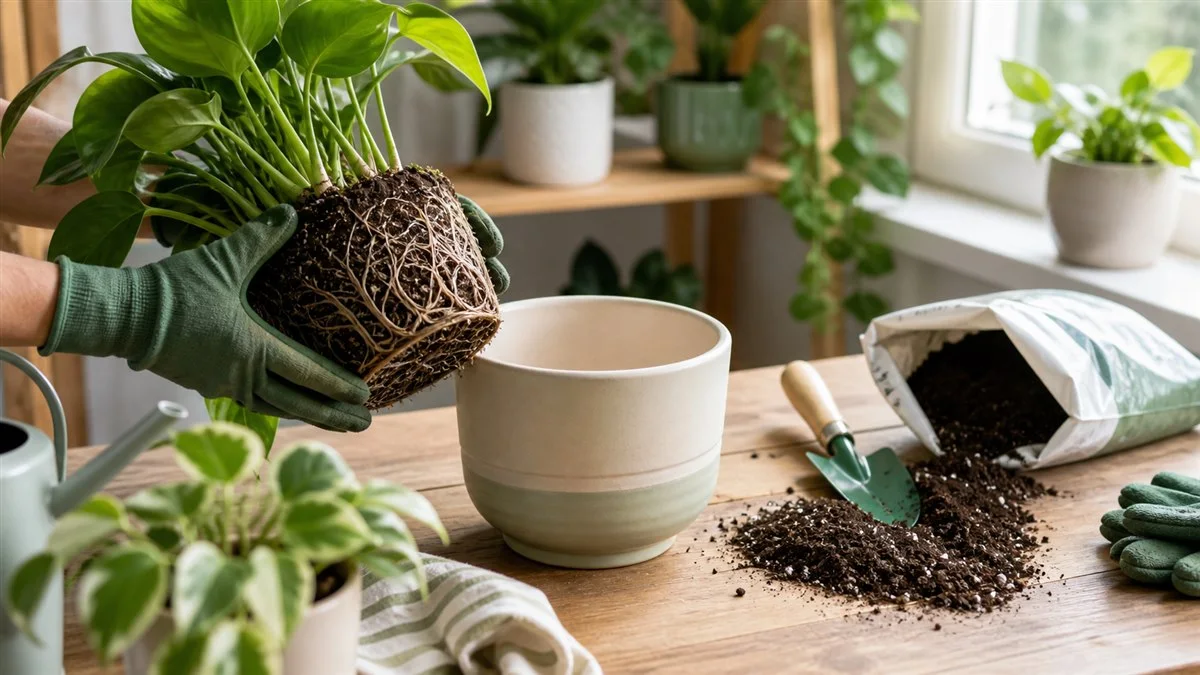
When to Repot a Houseplant
Use root health, soil condition, pot size, drainage, and timing to decide when a houseplant needs repotting and when it needs stability instead.
Read guide
Soil and potting hub
Repotting can help a plant, but unnecessary repotting can also slow recovery. Use this hub to inspect roots, choose pot size, improve drainage, and reduce transplant shock.
Roots circling tightly, escaping drainage holes, or filling the pot may mean it is time. Sparse or damaged roots may need a gentler approach.
How to use this hub
Soil mix, drainage, repotting, pot sizing, root health, amendments, and container decisions for healthier indoor plants.
FAQ