
Houseplant troubleshooting
Black spots on plant leaves and what they may mean
Black or dark brown leaf spots can come from leaf damage, fungal or bacterial issues, cold injury, overwatering stress, or sun scorch. Check the pattern before removing leaves or treating the plant.
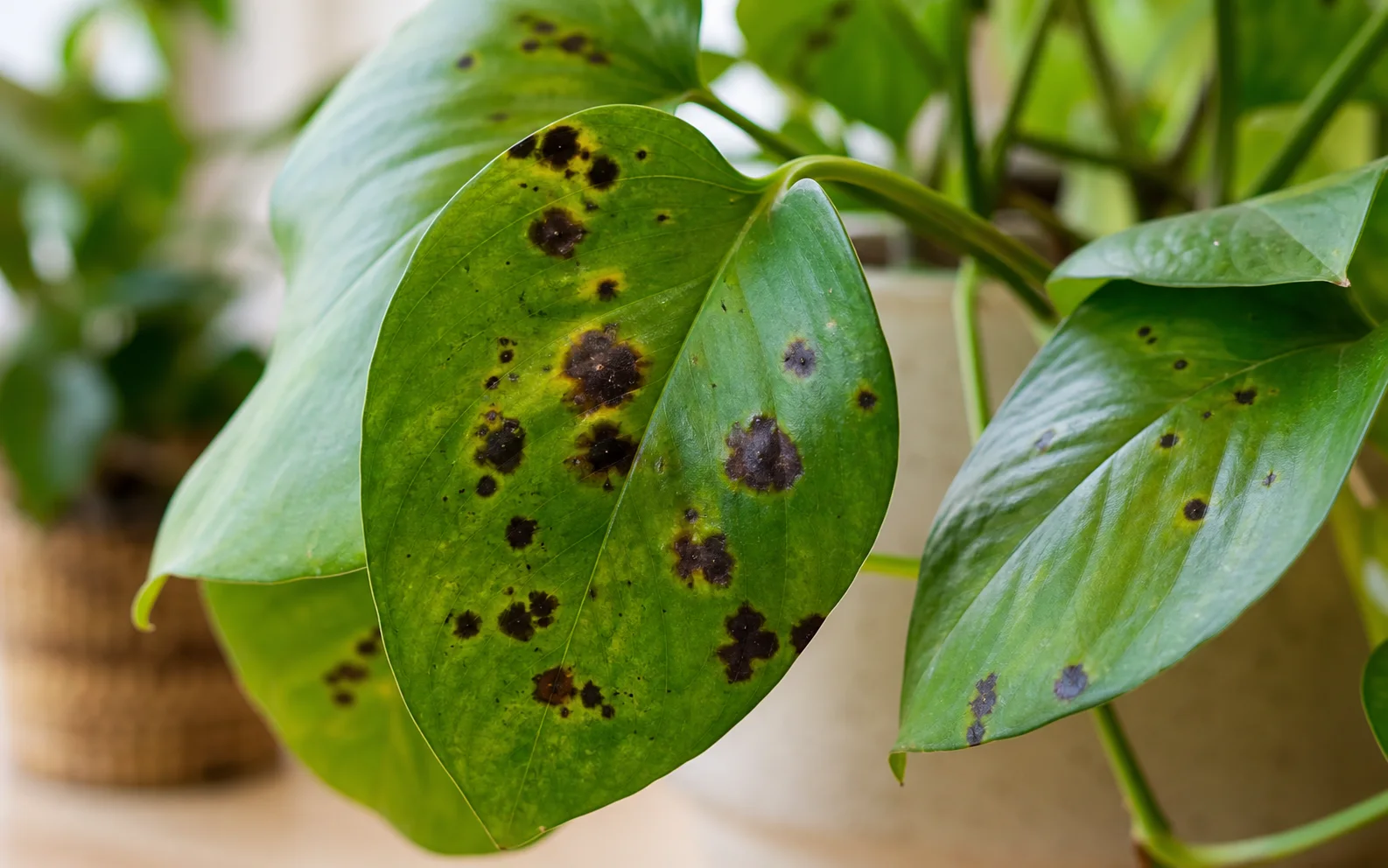
What You May See
Look at the whole plant before deciding on a fix. The age of the affected leaves, whether the soil is wet or dry, and how quickly the symptom appeared all help separate normal adjustment from an active care problem.
- Dark brown or black spots on leaf surfaces
- Yellow halos around some spots
- Spots spreading after leaves stay wet
- Soft stems or wet soil along with spotting
Visual Checks
Compare this symptom image with the affected leaves, roots, soil surface, or growth pattern on your plant. Use it as a visual reference, then confirm the cause with the checks below before changing care.
Black Spots on Leaves exampleUse this as the main visual reference for the symptom pattern.
Likely Causes
Match the symptom to the plant's recent care history. The same leaf problem can come from different causes, especially when light, soil moisture, temperature, repotting, and fertilizer changed around the same time.
First Checks
Do these checks before buying treatments or repotting. A few minutes of inspection can prevent the common mistake of watering a plant with damaged roots, fertilizing a stressed plant, or moving a low-light plant straight into harsh sun.
- Check whether spots are spreading or staying fixed.
- Look for yellow halos, soft tissue, or mushy stems.
- Review watering, leaf wetness, and airflow.
- Inspect roots if spotting appears with yellowing and wet soil.
What To Do Next
Choose the step that matches what you confirmed. If more than one cause seems possible, start with the least disruptive correction and watch new growth, root condition, and drying time for signs of recovery.
- Remove badly affected leaves with clean tools.
- Keep foliage drier and improve airflow.
- Water the soil rather than repeatedly wetting leaves.
- Isolate the plant if spots are spreading quickly.
What To Avoid
- Do not treat every black spot as the same disease.
- Do not mist spotted leaves in low airflow.
- Do not compost diseased leaves indoors.