
Compact foliage care profile
Chinese money plant Care Guide
Chinese money plant, or Pilea peperomioides, grows best in bright indirect light, a small draining pot, and a watering rhythm that lets the upper mix dry before the next soak. It is forgiving, but curled leaves, leaning stems, and yellow lower leaves usually point to light, water, or pot-size problems.
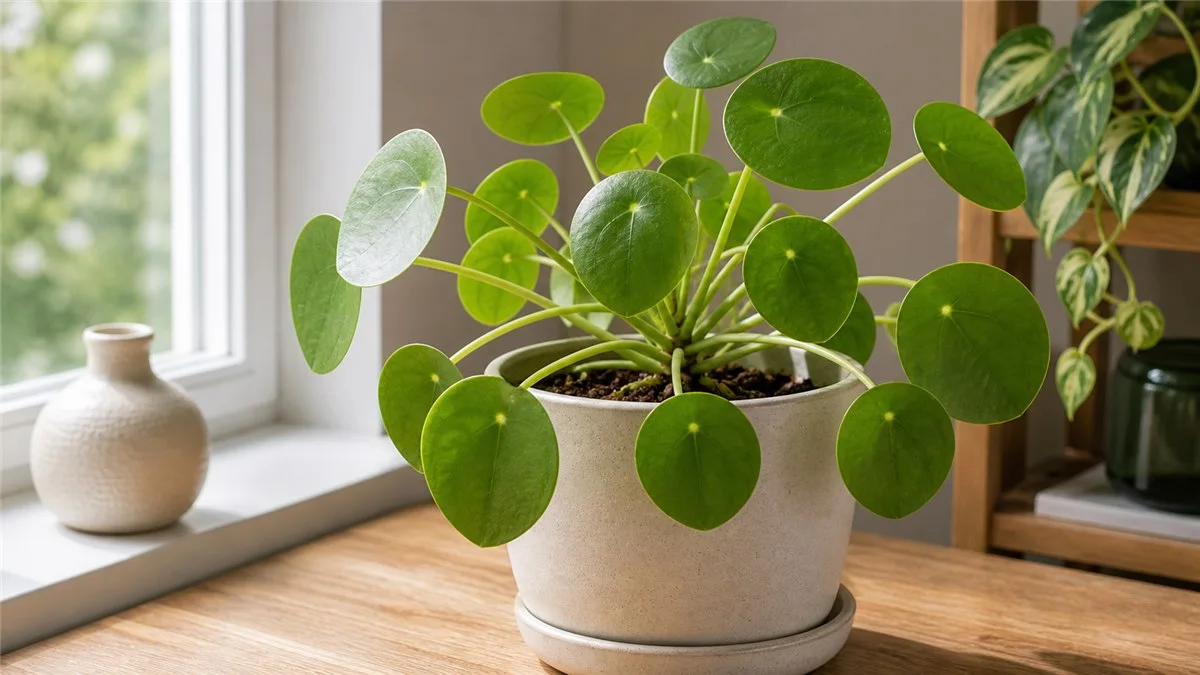
Quick Care Table
Light
Chinese money plant does best in bright indirect light with regular rotation. Use leaf posture, new growth, and drying speed as your practical feedback. If growth becomes stretched, pale, or smaller than expected, move the plant closer to a brighter window gradually instead of making a sudden full-sun jump.
Watering
Water when the top inch or two dries, then drain fully. Always check the actual potting mix before watering. Pot size, root mass, light, season, temperature, and soil texture can change the interval by several days, so a fixed calendar should only be a reminder to inspect.
Soil and Potting
Use light, airy indoor mix in a snug pot with drainage. The right mix should hold enough moisture for the roots but still let excess water leave the pot quickly. If the plant stays wet for many days, improve drainage, increase light, or check whether the pot is too large for the root ball.
Temperature and Humidity
Keep the plant away from cold drafts, heat vents, and sudden placement changes. Stable conditions are especially important after repotting, pruning, shipping, or moving the plant to a new room.
Common Problems
Most chinese money plant problems come from a short list of stress points: moisture, light, root health, temperature swings, pests, or recent changes. Start by matching the visible symptom to the recent care history.
- Curled leaves from water, light, or temperature stress
- Leaning growth when the pot is not rotated
- Yellow lower leaves from wet soil or natural aging
- Long petioles in low light
- Slow growth in an oversized pot
Problem Guides For This Plant
Use these troubleshooting guides when the symptom matches what you are seeing. Check root moisture, light, and recent changes before adjusting several parts of care at once.
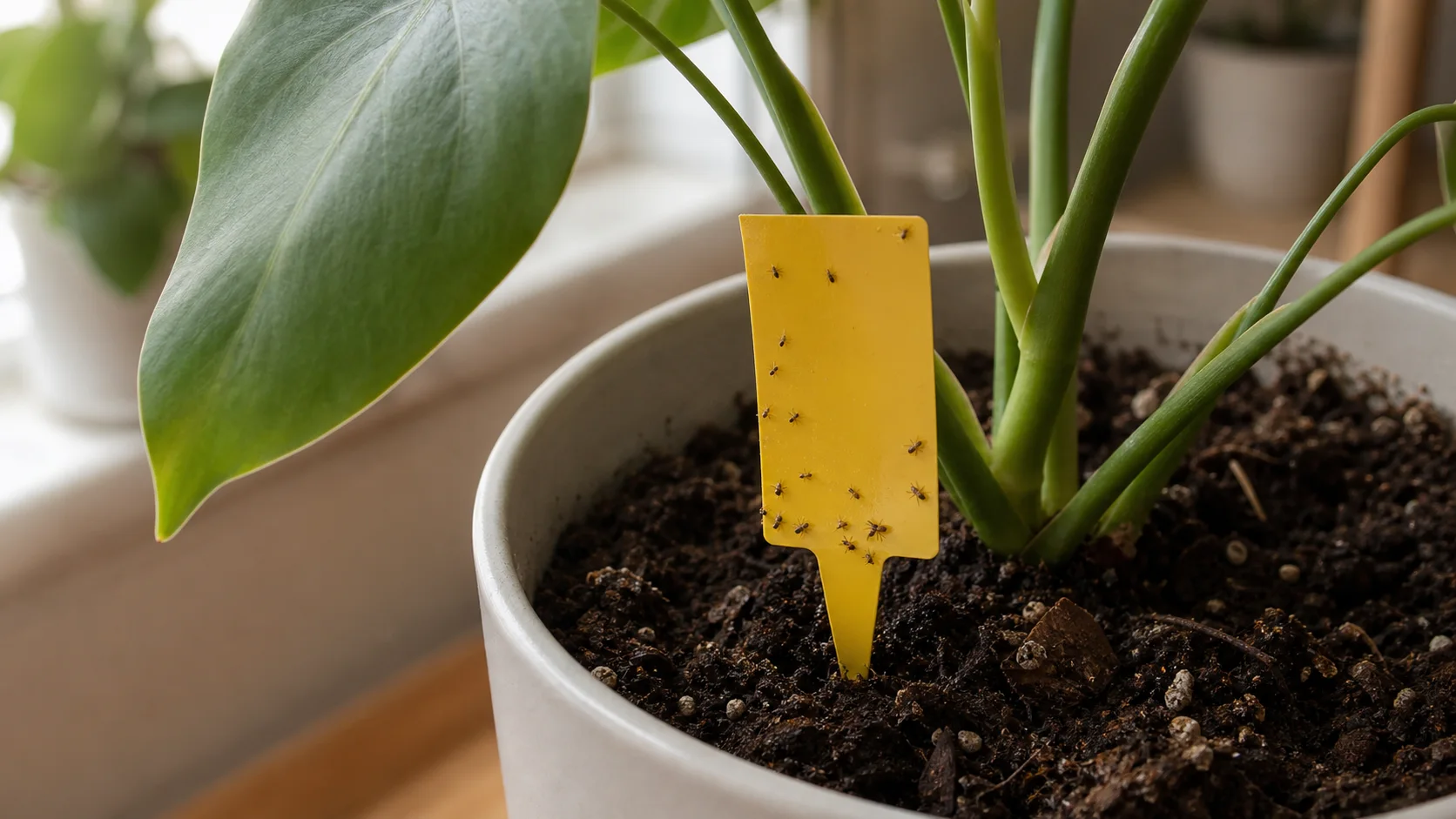 Fungus GnatsFungus gnats thrive in damp organic potting mix. Control works best when you combine drying the top layer, catching adults, and interrupting larvae in the soil.
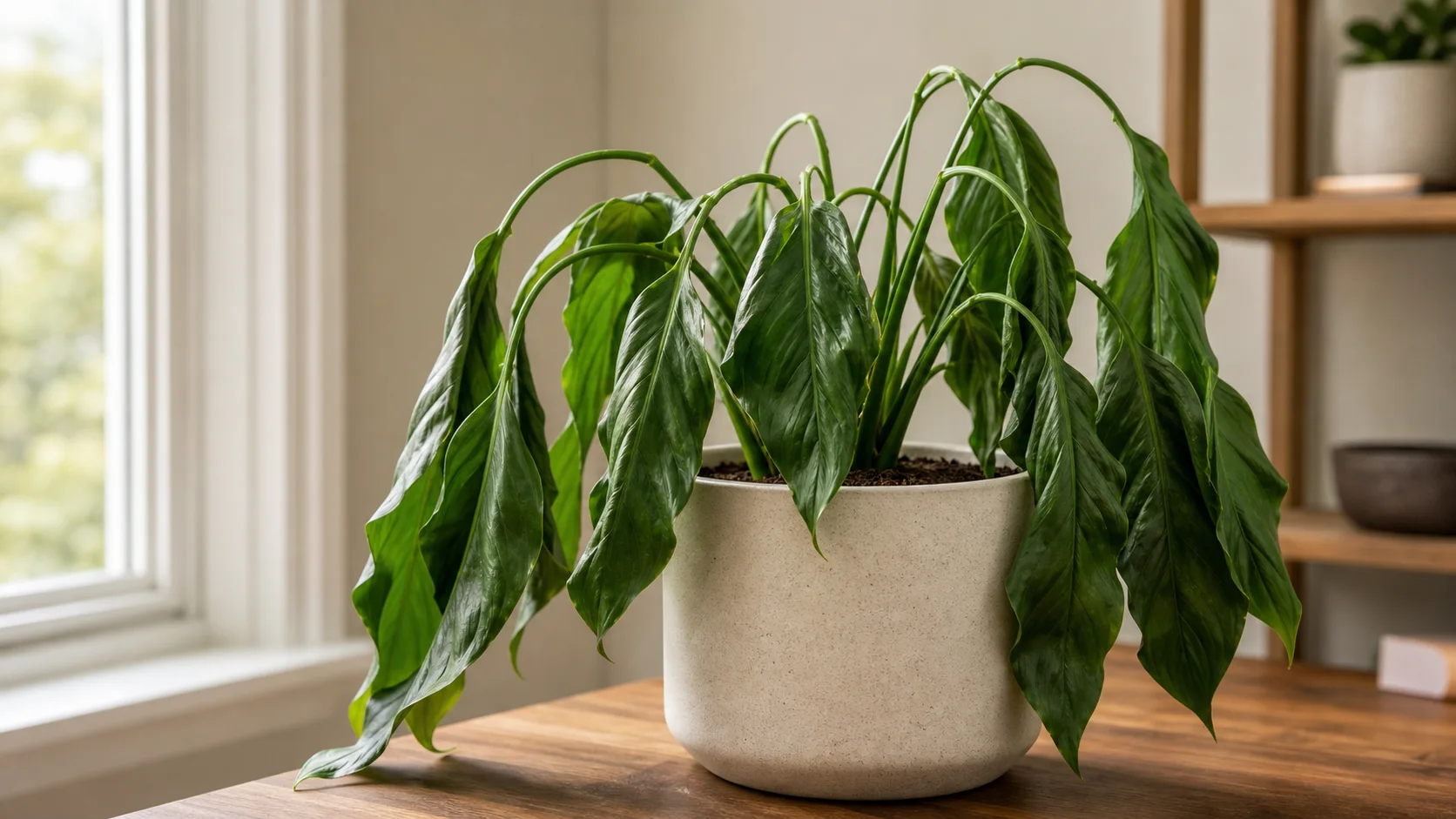 Drooping LeavesDrooping is a signal, not a diagnosis by itself. Plants can droop from thirst, saturated roots, heat, cold, transplant stress, or sudden light changes.
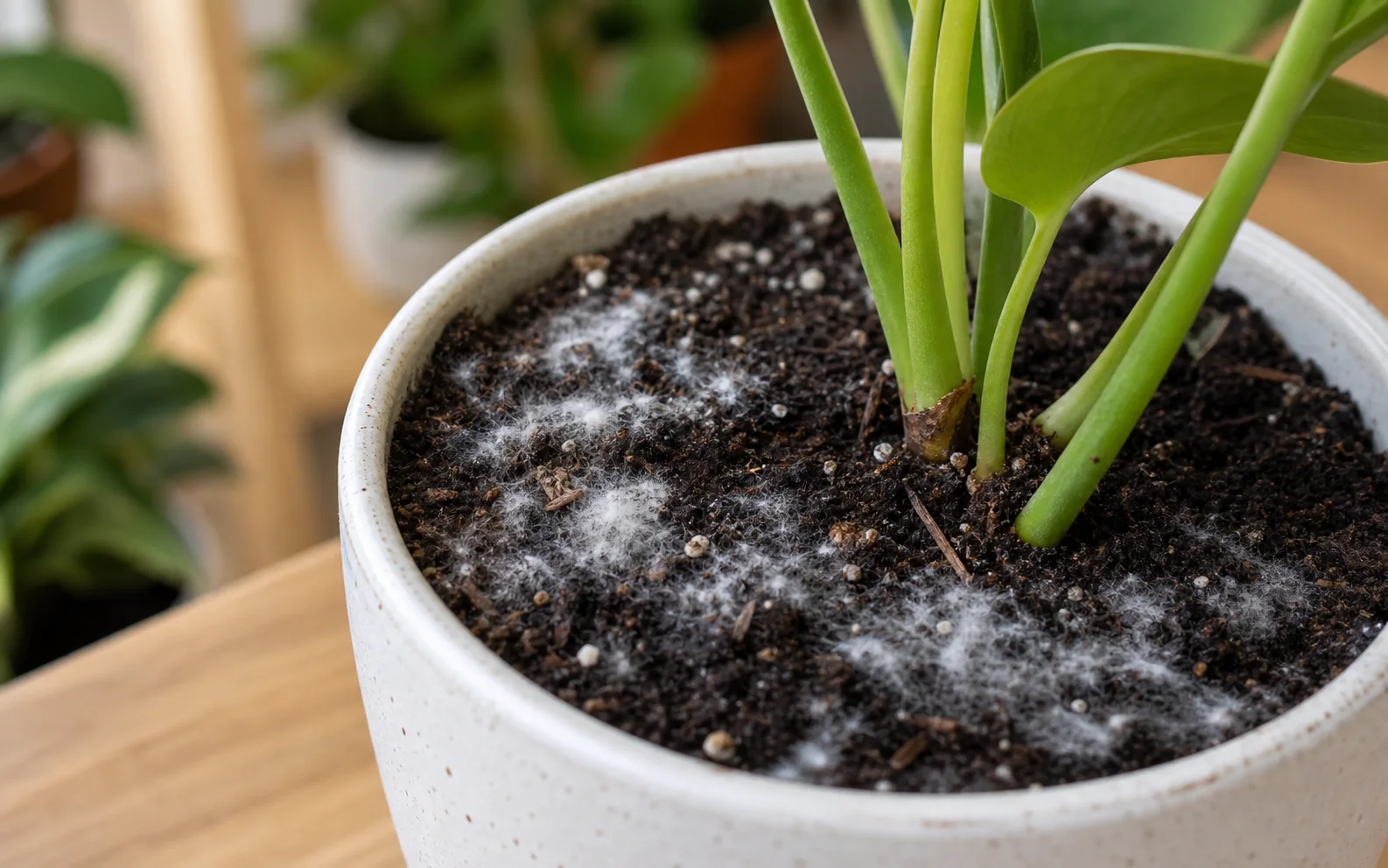 Moldy SoilWhite fuzzy mold on potting soil often points to damp organic material and slow drying. It is usually a care-condition clue: watering, airflow, debris, pot size, and soil structure need a closer look.
Collections Featuring This Plant
Compare this plant with nearby choices before buying another pot or moving it to a different room. Collections are organized by light, humidity, routine, safety, and growth habit.
 Pet-Safe HouseplantsThis collection focuses on houseplants commonly grown in pet households. Pet-safe does not mean chew-proof or risk-free, but these choices are better starting points than toxic foliage plants when animals investigate leaves.
Care Notes
- Rotate the pot every week so the stem stays straighter.
- Let the upper mix dry before watering again.
- Separate offsets only after they have roots of their own.
- Avoid jumping to a much larger pot during repotting.
Chinese Money Plant Light Requirements
Chinese money plant wants bright indirect light for compact growth and round, sturdy leaves. Place it close to a bright window where it sees strong ambient light but is protected from long periods of hot direct sun, especially in the afternoon.
Because Pilea peperomioides leans hard toward its light source, rotation is part of normal care. A quarter turn once a week keeps the plant more balanced and prevents the main stem from bending heavily in one direction.
- Best placement: east window, bright north window, or filtered south or west window.
- Low-light warning signs: long petioles, small leaves, leaning, and slow offset growth.
How to Water Pilea Peperomioides
Water Chinese money plant when the top inch or two of mix feels dry. Give the pot a thorough soak, let water run through the drainage holes, and empty the saucer afterward. This gives the roots an even drink without leaving them in stagnant water.
The plant dislikes both extremes. If the mix dries completely for too long, leaves may droop or curl. If the pot stays wet for days, lower leaves often yellow and roots can decline. A small pot with drainage makes the watering rhythm much easier to manage.
- Drooping plus very dry soil usually means it needs a full watering.
- Yellowing plus wet soil means pause watering and check drainage.
Why Chinese Money Plant Leaves Curl
Curling leaves are a symptom, not a single diagnosis. Leaves can cup or curl from underwatering, overwatering, sudden cold, heat near a window, very bright sun, or inconsistent moisture. Check the soil first, then review light and temperature.
New leaves can also emerge slightly folded before they flatten. That is normal if the plant is otherwise growing well. The pattern matters: one odd leaf is less concerning than many leaves curling while growth slows.
- Curling with dry soil: water thoroughly and monitor recovery.
- Curling with wet soil: improve drying time before watering again.
- Curling near a hot or cold window: move the plant back slightly.
Offsets and Propagation
Healthy Chinese money plants often produce small offsets around the base. Wait until an offset has several leaves and its own roots before removing it. Cutting too early slows recovery for both the parent plant and the baby plant.
To propagate, loosen the mix, separate the rooted offset with a clean cut if needed, and pot it into a small container with light mix. Keep it bright, lightly moist, and stable while the new roots settle.
- Do not bury the small crown too deeply.
- Use a small pot so the mix does not stay wet around young roots.
Soil, Pot Size, and Repotting
Pilea peperomioides does best in a light indoor mix that drains quickly but does not become dusty and dry immediately. A standard houseplant mix with added perlite is usually enough. Heavy, compacted soil makes yellowing and root stress more likely.
Repot when roots fill the pot, watering becomes difficult, or the plant is clearly crowded. Move up only one pot size. An oversized pot holds extra moisture around a small root system and can make an easy plant suddenly difficult.
Before You Change Care
Check soil moisture, light exposure, pot drainage, recent moves, temperature swings, and pest signs before changing several variables at once. Most houseplants respond more clearly when you adjust one likely issue, then watch new growth.
Pet and Household Safety
Generally considered non-toxic to pets. Plant identity matters, because common names can overlap. If a pet or child chews the plant and symptoms appear, contact a veterinarian, poison control service, or local medical professional rather than waiting on a plant-care guide.