
Houseplant troubleshooting
Why houseplants drop leaves after stress
Leaf drop often follows a change: lower light, cold drafts, watering swings, shipping, repotting, or pest pressure. Stabilize conditions and watch new growth before making repeated changes.
What You May See
Look at the whole plant before deciding on a fix. The age of the affected leaves, whether the soil is wet or dry, and how quickly the symptom appeared all help separate normal adjustment from an active care problem.
- Leaves dropping after a move
- Lower leaves falling first
- Sudden drop after cold exposure
- Leaf drop with sticky residue or pest signs
Visual Checks
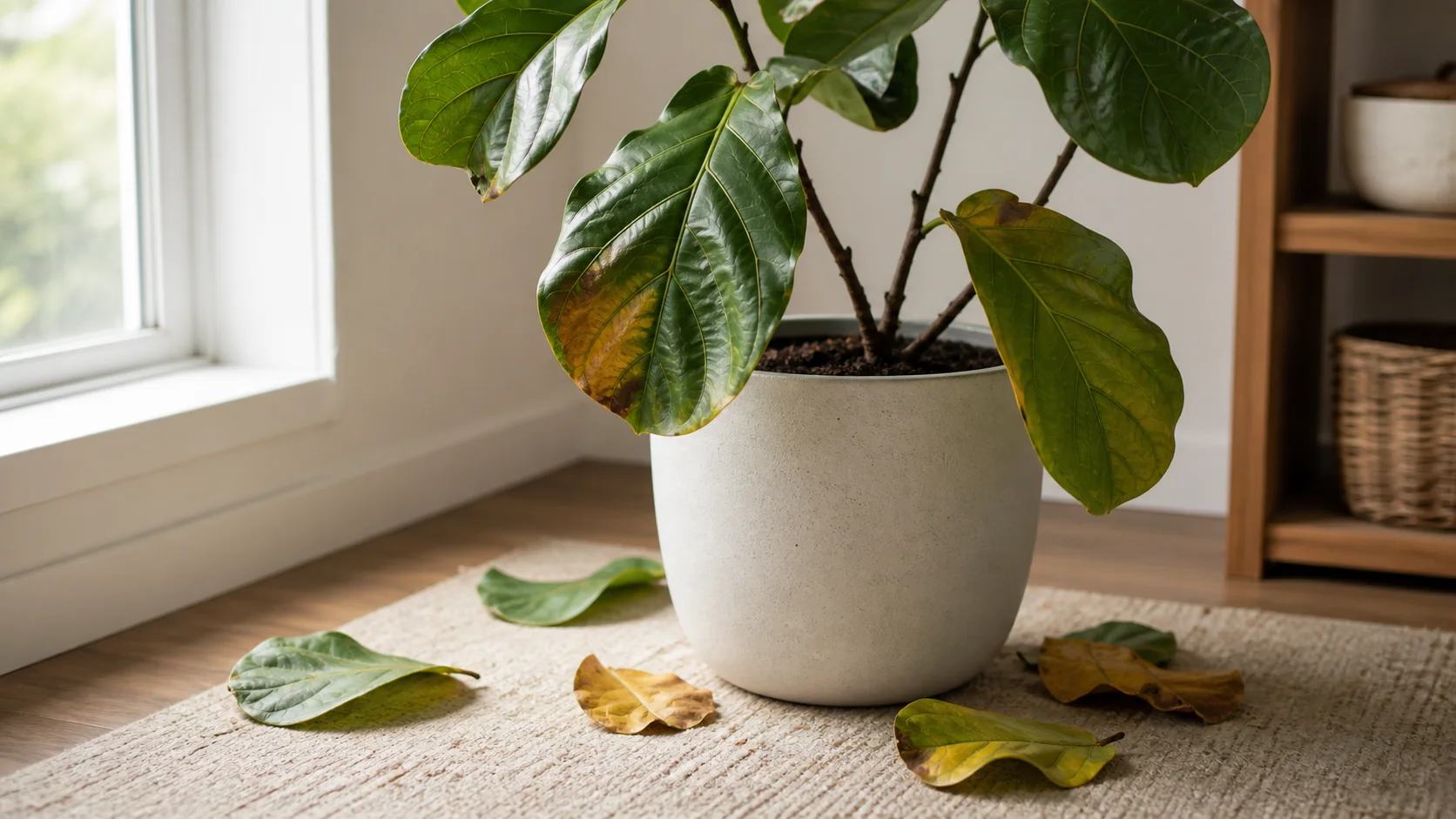
Compare this symptom image with the affected leaves, roots, soil surface, or growth pattern on your plant. Use it as a visual reference, then confirm the cause with the checks below before changing care.
Leaf Drop exampleUse this as the main visual reference for the symptom pattern.
Likely Causes
Match the symptom to the plant's recent care history. The same leaf problem can come from different causes, especially when light, soil moisture, temperature, repotting, and fertilizer changed around the same time.
First Checks
Do these checks before buying treatments or repotting. A few minutes of inspection can prevent the common mistake of watering a plant with damaged roots, fertilizing a stressed plant, or moving a low-light plant straight into harsh sun.
- Check for recent location, season, or watering changes.
- Inspect stems and leaf undersides for pests.
- Compare current light to the plant previous location.
- Check soil moisture and drainage.
What To Do Next
Choose the step that matches what you confirmed. If more than one cause seems possible, start with the least disruptive correction and watch new growth, root condition, and drying time for signs of recovery.
- Hold the plant in stable bright indirect light.
- Correct watering gradually based on soil moisture.
- Treat pests early if found.
- Prune bare stems only after recovery begins.
What To Avoid
- Do not keep moving the plant every few days.
- Do not repot during active shock unless root rot is likely.
- Do not strip healthy leaves to force new growth.